I am Gonzalo, a Postdoctoral Researcher at the Laboratory for the Computational Analysis of Egonetworks, Social Cohesion, and Exclusion (COALESCE Lab) at the Autonomous University of Barcelona. My research examines how people understand social inequalities and how these are reproduced, reinforced, or contested through social relationships, combining social stratification, distributive justice, and social network analysis.
I completed my PhD in Sociology and Methodology of Social Research at the University of Milan, where I studied how the socioeconomic composition of people’s social environments shapes their attitudes towards inequality, with particular attention to personal networks and socializing institutions such as schools and neighbourhoods.
You can find more about my publications, work in progress, and teaching on this site. Feel free to reach out if you’d like to connect, collaborate, or discuss research.
PhD in Sociology and Methodology of Social Research, 2025
University of Milan
MA in Sociology, 2018
Pontifical Catholic University of Chile
BA in Sociology, 2014
Pontifical Catholic University of Chile
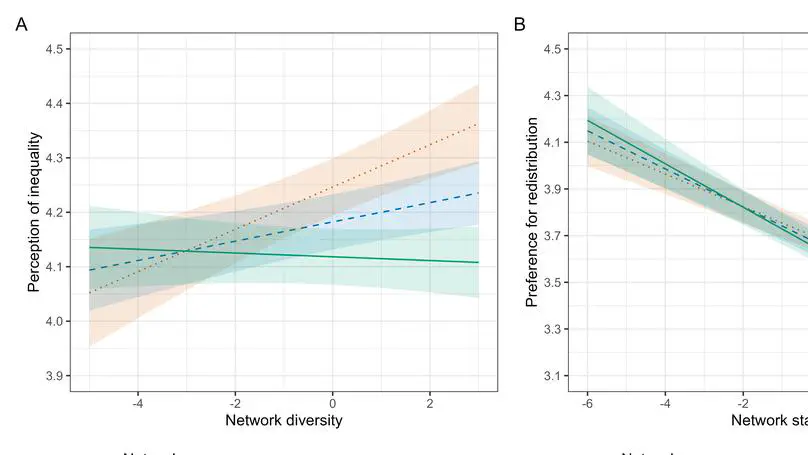
This paper explores how the socioeconomic composition of individuals’ social networks shapes attitudes towards inequality in contemporary societies. Results indicate that individuals with more socioeconomically diverse networks show modestly higher national inequality perceptions, whereas having higher-status acquaintances is strongly associated with lower support for redistribution. Overall, the study advances meso-level perspectives on distributive justice by demonstrating how everyday social relationships shape perceptions and beliefs about inequality in stratified societies.

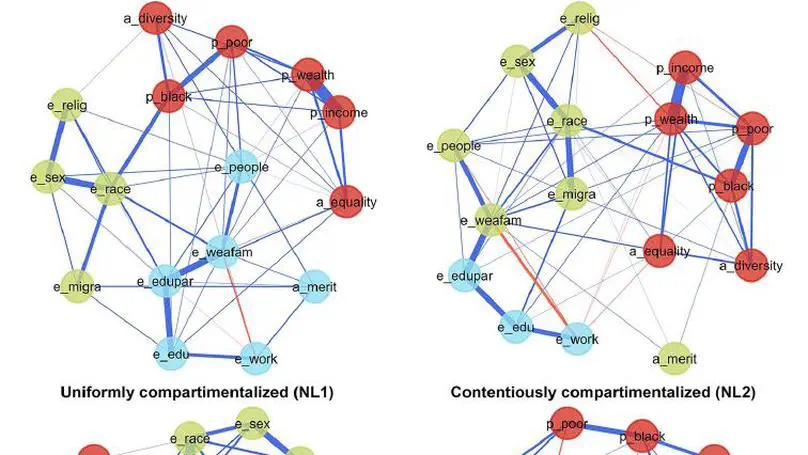
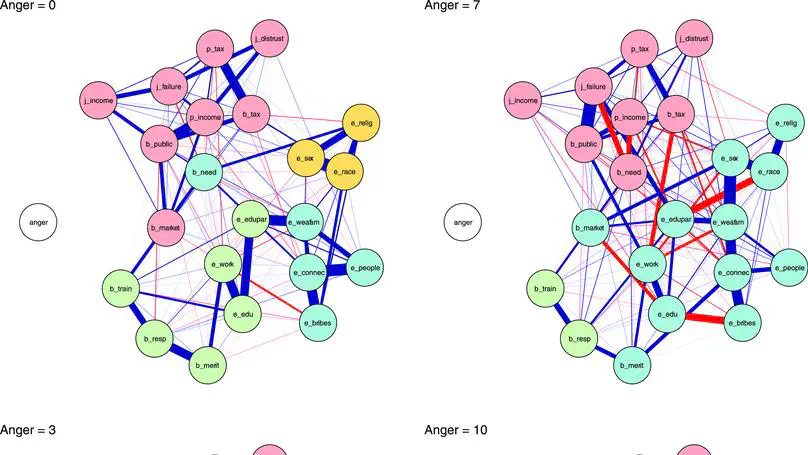
This study examines inequality belief systems in the U.S. using data from the 2019 ISSP Social Inequality module, showing they form cohesive small-world networks centered on perceptions of inequality and support for redistribution. By applying network models and simulations, it demonstrates that anger strengthens and polarizes these systems, while changes in central attitudes trigger broader shifts across beliefs.

This paper introduces the concept of inequality belief systems as networks of perceptions, explanations, and attitudes. It uses U.S. and Dutch survey data to identify distinct systems that differ structurally and shape support for redistribution.

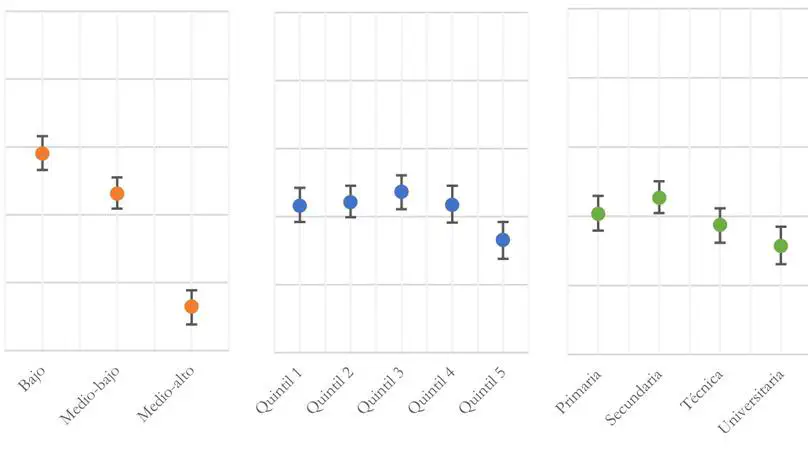
This paper examines people’s evaluation of distributive justice in Chile. The objective is to explore how individuals’ subjective social position affects their judgment of their own income and whether this judgment rests on a notion of merit.

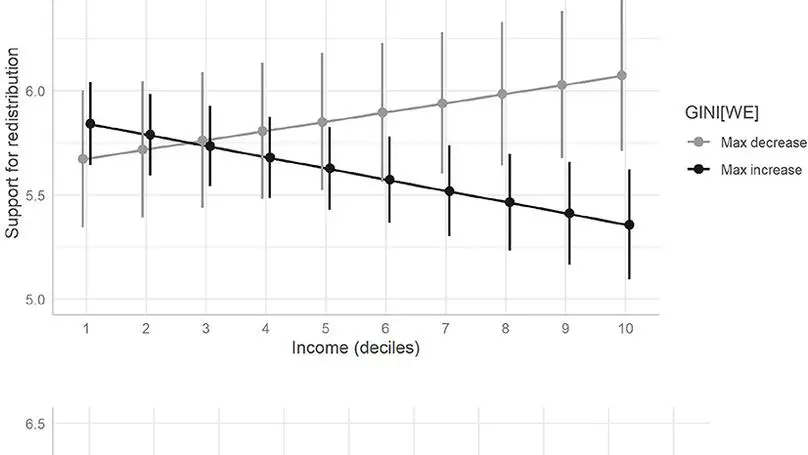
A series of theories focused on self-interest have continuously established a negative link between people’s income and their support for the reduction of inequalities through redistribution. Despite this, the evidence is scarce and sometimes contradictory while its study in Latin America is almost non-existent. Using data from the LAPOP Survey between 2008 and 2018, a longitudinal dimension is considered for the first time in the measurement of Latin American redistributive preferences, using hybrid multilevel regression models.